
Does Medicare pay for home care? Yes — but only for a narrow slice of it. Medicare covers skilled, short-term, medically necessary home health care for a homebound parent under a doctor's plan of care. It does not cover long-term, round-the-clock, or custodial care — the everyday help with bathing, cooking, and companionship most aging parents need most.
Imagine this: your dad is coming home from the hospital after a fall. The discharge nurse mentions a home health aide a few times a week. You nod, relieved — Medicare will cover that, right? That's what it's for.
Then the first bill arrives, or the agency calls to say the visits are stopping, and you realize nobody ever explained what "covered" actually meant. You're not alone. The question "does Medicare pay for home care" is one of the most searched caregiving questions in America, and the confusion around it costs families real money — and real stress — every single day.
Does Medicare Pay for Home Care? The Short Answer
Yes — but only for a narrow slice of it. Medicare covers skilled, short-term, medically necessary home health care. It does not cover long-term, round-the-clock, or custodial care — the everyday help most aging parents need most.
That gap between what families expect and what Medicare pays for is where most of the surprise bills live.
What home care does Medicare actually cover?
Medicare Part A and Part B will generally pay for home health services when all of these are true:
- Your parent is homebound — leaving home takes considerable effort.
- A doctor has ordered the care as part of a plan of care they review regularly.
- The care is skilled — provided by a licensed nurse, physical therapist, occupational therapist, or speech therapist — and needed on a part-time, intermittent basis.
That typically means wound care after surgery, IV antibiotics, physical therapy after a hip replacement, or teaching a family member to manage a new diagnosis. When those conditions are met, Medicare usually covers the visits at no cost to your parent beyond the Part B deductible, through a Medicare-certified home health agency. A home health aide can be covered — but only as part of that skilled plan of care, alongside the nurse or therapist visits. The aide alone, without skilled care attached, isn't covered.
What home care does Medicare not cover?
This is the part that catches families off guard:
- Personal care on its own. Help with bathing, dressing, toileting, or getting around — when that's the only need — is custodial care, and Medicare doesn't pay for it.
- 24-hour or live-in care. Medicare covers intermittent visits, not someone around the clock.
- Meals, housekeeping, and transportation. Grocery runs, cleaning, rides to appointments — all out of pocket.
- Long-term care. If your parent needs help indefinitely, Medicare isn't the payer. It was never designed to be.
So the aide who comes three mornings a week to help your mom shower and get dressed? Wonderful, necessary care — and almost certainly not a Medicare bill.
So What Actually Pays for Home Care?
Once you know the gap, you can plan for it. The main options families use:
Medicaid. For parents with limited income and assets, Medicaid can cover long-term home care — but the rules and programs vary a lot by state, and there's usually an application process that takes time. Start it before you need it, not during a crisis.
VA benefits. If your parent is a veteran, or the surviving spouse of one, programs like Aid and Attendance can help pay for home care. Many families never think to ask.
Long-term care insurance. If your parent bought a policy years ago, now is the time to read it. Coverage, waiting periods, and daily benefit amounts vary widely.
Local help. Your Area Agency on Aging can point you to subsidized programs, respite care, and sliding-scale services in your parent's county. It's free to call, and most families underuse it. And for many families, the rest is private pay — split between siblings, which is exactly why the money conversation matters as much as the care conversation. Who pays what, who's tracking receipts, how you keep it fair when one sibling does more hands-on care — those questions need a system, not a group-chat argument.
Three Things to Do This Week
1. Ask the discharge planner — in writing. Before your parent leaves the hospital or rehab, ask exactly which services Medicare will cover, for how long, and through which agency. Get the plan of care in writing. Verbal reassurances don't survive the first denied claim.
2. Call your local SHIP counselor. Every state has a free State Health Insurance Assistance Program. A counselor will walk through your parent's specific Medicare coverage at no cost — no sales pitch.
3. Have the money talk before the next bill. Sit down with your siblings and map out what home care will actually cost once Medicare's part ends. Who can contribute what? What's the monthly number? Writing it down now beats discovering it in a crisis later.
Why I Built FairNest
I built FairNest because the money part of caregiving was the part nobody wanted to talk about — and the part that quietly broke families. In our Nest, cost splitting keeps every shared expense visible: the aide hours Medicare doesn't cover, the pharmacy runs, the grab bars in the bathroom. No more one sibling floating the bills and resenting it.
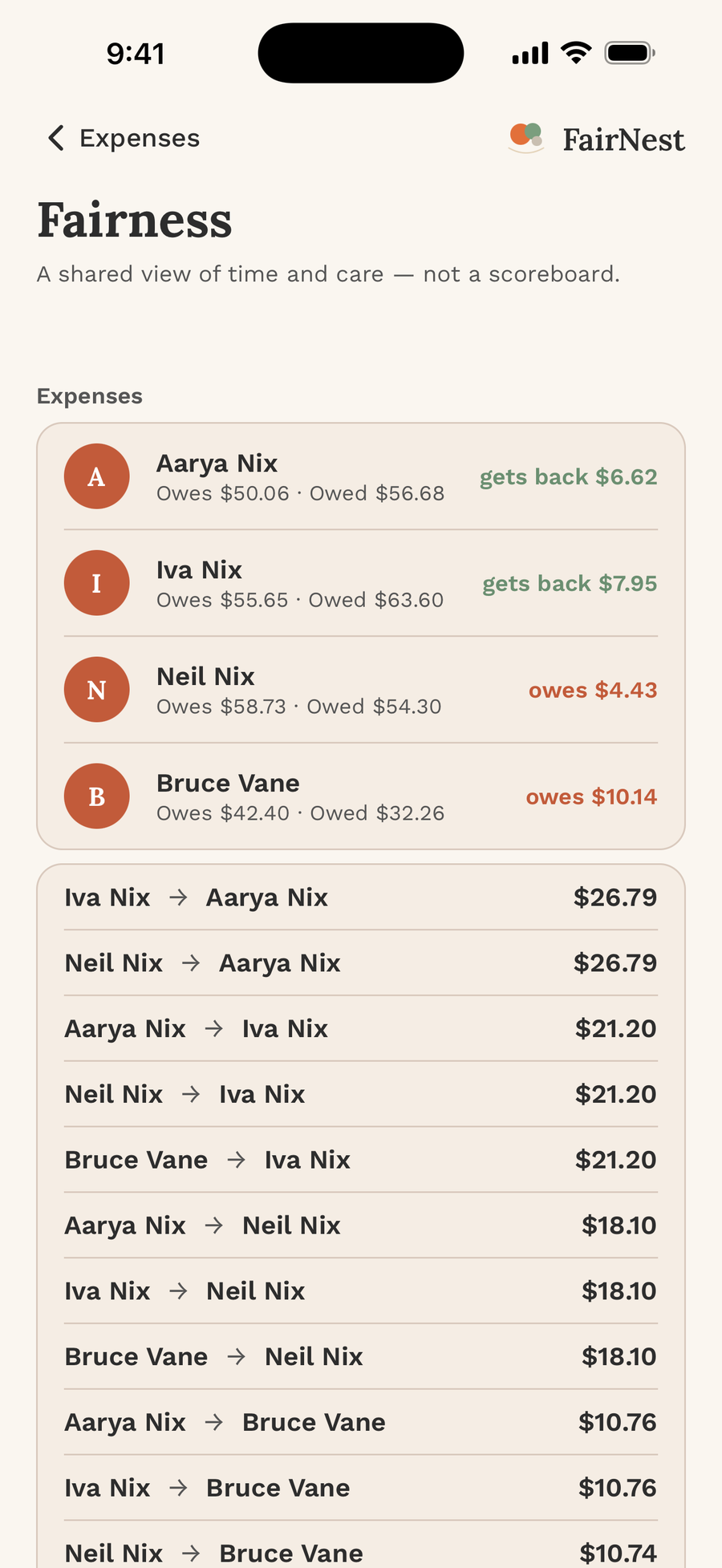
It's my own app, built for families like ours — the ones doing the math at the kitchen table after the discharge papers are signed.
Bottom line
Bottom line: Medicare pays for home care only when it's skilled, short-term, and medically necessary for a homebound parent under a doctor's plan of care. The aide who helps Mom shower three mornings a week, the 24-hour care, the meals and rides — that's custodial care, and it's on the family, Medicaid, VA benefits, or long-term care insurance. Get clear on where Medicare stops before the first bill arrives, and plan for everything after.
If home care is on the horizon for your family, get clear on the money early. Medicare helps — for a while, for specific things. Knowing where it stops lets you plan for everything after.
This is general information, not financial or legal advice — check your parent's specific coverage with Medicare or a SHIP counselor before making decisions.
FairNest is my family caregiving app — one shared Nest for tasks, coverage, handoff notes, cost splitting, and med tracking. Find it on the App Store at https://apple.co/4xRXJuq and on Google Play at https://play.google.com/store/apps/details?id=com.bizvizorllc.fairnest, and follow along at https://www.instagram.com/fairnestapp/.