
Sundowning in dementia is evening agitation — increased confusion, anxiety, or restlessness that starts in the late afternoon or evening, often triggered by tiredness, low light, hunger, and a disrupted internal clock. You can't always prevent it, but you can calm evenings by bringing the lights up before dusk, keeping the late afternoon quiet, checking basic needs early, and following the same simple routine every night.
Say your mom is mostly okay in the morning. She has tea, she chats, she knows where she is. Then around 5 p.m. something shifts. She starts pacing, asking to go home even though she is home, checking the door, saying she needs to pick up the kids — kids who are now in their forties. If you're searching for how to calm sundowning in dementia, you're probably living that exact late-day unraveling.
That pattern has a name — sundowning — and it's one of the most common reasons families tell me the day feels fine until it suddenly isn't. You can't always prevent it, but you can make evenings calmer for both of you.
This isn't medical advice — talk to your parent's doctor about what's right for them, especially if agitation is new, sudden, or getting worse, which can sometimes signal pain, infection, or a medication issue.
What is sundowning in dementia, and why does it get worse in the evening?
Sundowning describes increased confusion, anxiety, or restlessness that tends to start in the late afternoon or evening. A few things often stack up: tiredness, low light and shadows that make a familiar room harder to read, hunger or thirst, noise from dinner prep and TV, and an internal clock that no longer sorts day from night cleanly.
That stack matters. You're not arguing with a mood — you're lowering the triggers piling up at the hour when your parent has the least reserve left.
How do I calm sundowning before the hard hour starts?
The most useful change is the least dramatic: don't wait until 5:30 to respond. Start shaping the evening at 3.
Bring the light up early. Open curtains while there's still daylight, then turn on warm, steady lights before the room gets dim. Closing blinds at dusk can also help if reflections in dark windows are confusing.
Front-load calm, not activity. A busy late afternoon — visitors, errands, a loud show — often borrows from the evening. Put stimulating things earlier and keep the late afternoon deliberately boring: a short walk, a snack, a familiar program at low volume.
Check the basics first. Is she hungry? Does she need the bathroom? Is she in pain, too hot, too cold? A surprising number of hard evenings soften once a basic need is met.
What evening routine helps calm sundowning?
People with dementia often borrow calm from routine when memory can't provide it. A routine doesn't need to be elaborate. It needs to be the same.
Try three anchors in the same order: dinner at roughly the same time, then a calming activity she still enjoys — folding towels, music from her younger years, a photo album — then wind-down steps toward bed. Say what's happening in short sentences: "Dinner is done. Now we're listening to music. I'm staying here tonight."
If she asks to go home, try not to debate the facts. "You ARE home" rarely settles the feeling underneath — usually "I don't feel safe." Answer the feeling: "You want to feel at home. You're safe here, and I'm here with you. Let's sit together." It won't work every time, but it starts fewer battles than correction.
If exit-seeking is part of your evenings, make the environment safer in advance: a clear, well-lit path, doors locked or alarmed if wandering is a risk, and keys and coats out of sight if they trigger "I need to leave" loops.
Make sure everyone uses what works
Here's the part families learn the hard way: one person discovers that turning the TV off and putting on a certain radio station settles Mom by 6 p.m. Next evening, someone else is covering, doesn't know that trick, and reinvents a rough night from scratch.
Write down what helps — the phrase, the music, the snack, the time restlessness peaks — and what makes it worse. Share it where every caregiver will see it before their shift, not buried in a group chat.
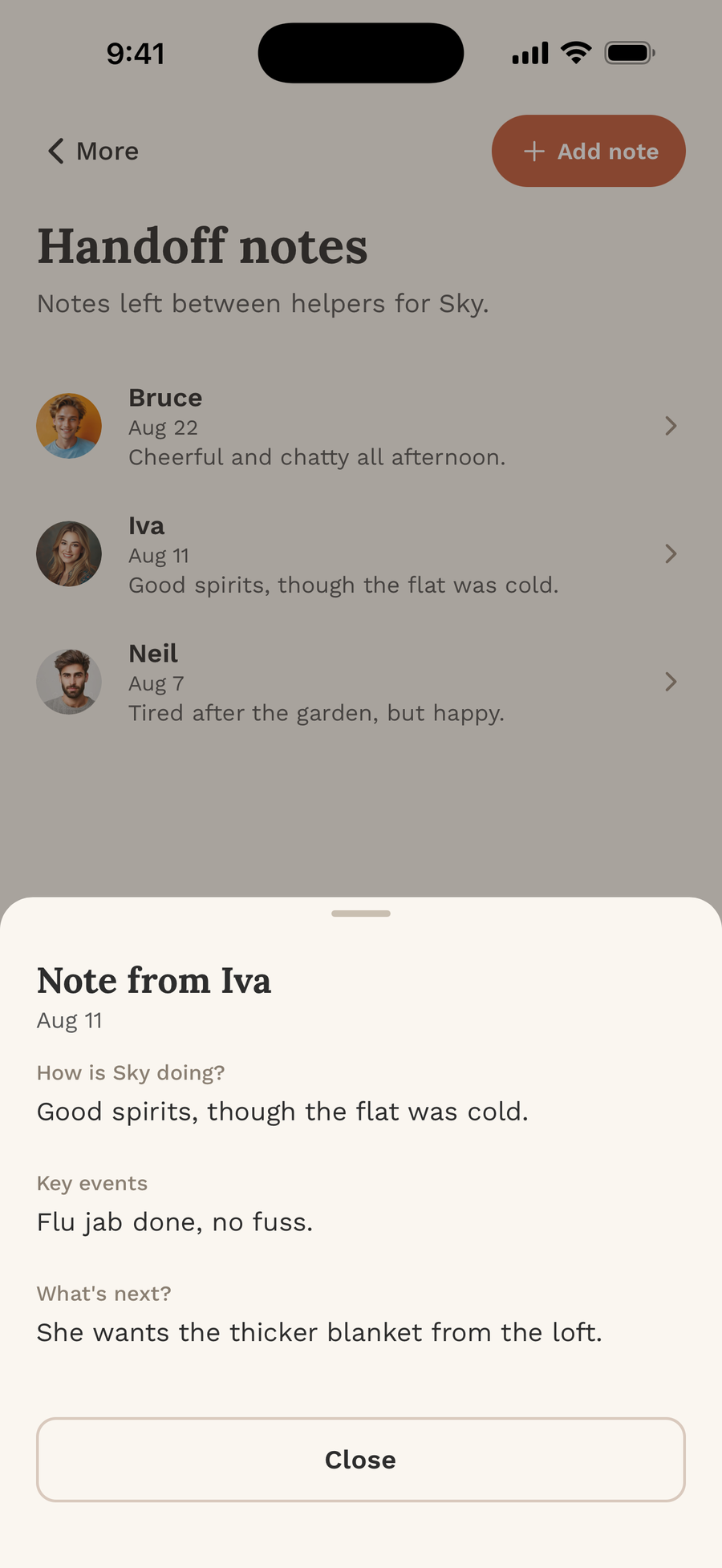
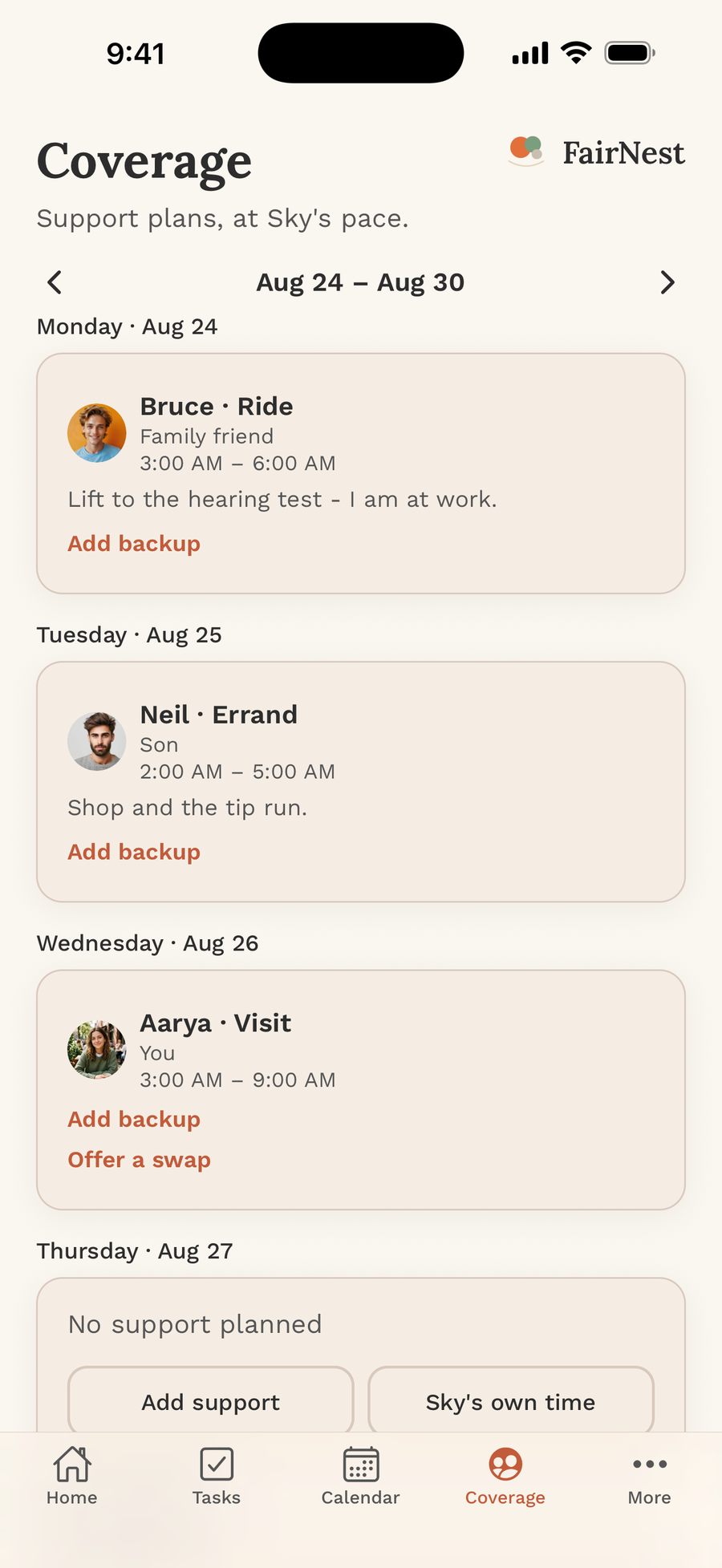
That's a big part of why I built FairNest, my own app. The hardest part of dementia evenings often isn't a lack of love or effort — it's that the knowledge lives with whoever was there last. In FairNest, a family shares one Nest for tasks, coverage, updates, handoff notes, cost splitting, and med tracking, so a note like "lights up at 4:30, music after dinner, don't argue about going home — sit with her" is there for the next person. Your parent can be in the Nest too. Learn more at getfairnest.com.
Protect the caregiver covering the hardest hours
Evenings are also when your own tank is lowest. If sundowning is a daily pattern, the person covering 4 to 8 p.m. has the hardest shift — plan for that honestly. Trade that window when you can. Track the pattern for a week or two — when it starts, what preceded it, what helped — because that log is useful to share with her doctor.
Some evenings will still be hard no matter how well you set them up. That is the dementia, not a failure of your patience.
Calmer evenings are built, not improvised
You probably won't eliminate sundowning. But a brighter room before dusk, a quieter late afternoon, basic needs checked early, the same three anchors every night, and a shared note about what helps — that makes hard evenings shorter more often than families expect.
Start with one change this week, not five. Most families tell me lights-before-dusk is the easiest first win. Then write down what you learn, so nobody learns it alone twice.
Bottom line
Sundowning is evening agitation with a pattern — tiredness, low light, and unmet needs stacking up at the hour your parent has the least reserve left. A simple sundowning routine for your elderly parent — lights up before dusk, a quieter late afternoon, the same three anchors every night — won't end every hard evening, but it will shorten more of them than you'd expect, and it gives every caregiver in the family a calmer way to help when evenings unravel.
FairNest is the app I built for exactly these evenings — one shared place for handoff notes, coverage, tasks, and updates, so the trick that worked last night is there for whoever is on tonight. Download FairNest on the App Store or on Google Play, and follow along on Instagram.