
Organizing a parent's medications when several people help starts with one master list everyone treats as the truth — name, dose, time, and purpose for every pill. Then separate the daily routine from storage, give every change one owner and one date, and make refills visible before they run out.
Say your sister is on the phone asking a simple question: "Did Dad already get his evening pill?" Nobody knows for sure. You gave him something this morning. She stopped by at lunch. The bottles are in a kitchen cabinet, the instructions are on three different pharmacy printouts, and you're typing "how to organize my parent's medications" into your phone hoping for a system that doesn't depend on anyone's memory.
If that sounds familiar, you're not disorganized. You're dealing with a job that was designed, badly, by accident: one parent, several helpers, a dozen bottles, and no shared record. Here's a calmer system your whole family can actually follow.
How do I create a master medication list for my parent?
Forget the bottles for a minute. Bottles change. Pharmacies change. Doses change. What your family needs first is one master list that is always current, and that everyone treats as the truth.
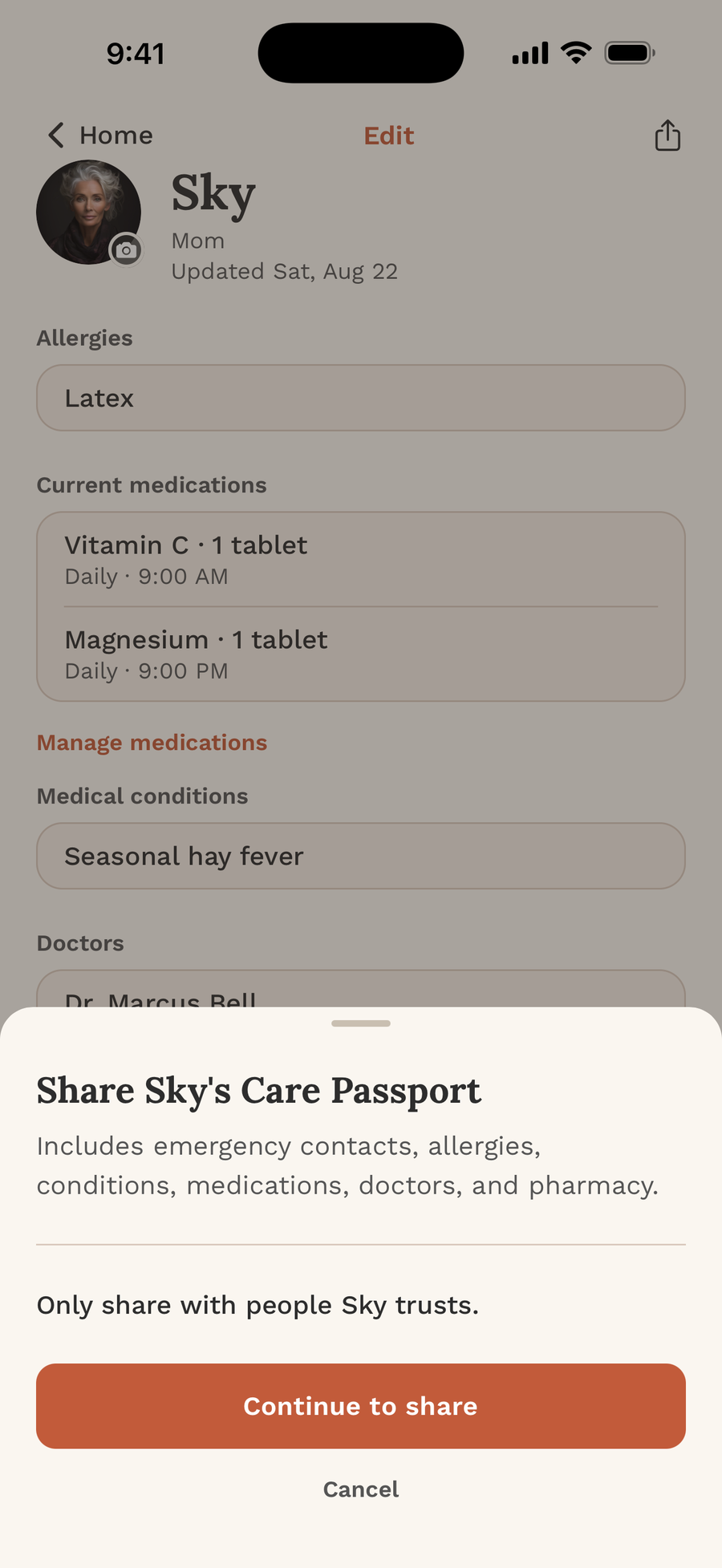
For each medication, write down the name, the dose, what time it's taken, what it's for in plain words, who prescribed it, and when it started. Add the pharmacy's name and number, and a note for anything tricky — "with food," "don't stop suddenly." Keep vitamins and regular over-the-counter medicines on the same list; doctors need the full picture, and those are the items families most often forget.
Then put that list in one shared place. A list on the fridge, a different one in your notes app, and a third in your brother's car is not a system — it's three chances to disagree. One list, one home, everyone looking at the same version.
This isn't medical advice — talk to your parent's doctor or pharmacist about what's right for them, especially before changing how any medication is stored or given.
Step two: separate the daily routine from the storage
Once the list is right, make the day itself simple. Most medication mistakes at home aren't about not caring. They're about a rushed morning, an interrupted routine, or two people each assuming the other one handled it.
Set up the week's pills in one consistent spot, at the same times each day, tied to things that already happen — breakfast, dinner, bedtime. If you use a pill organizer, agree on who fills it, on which day, and from the master list only, never from memory. When a dose is given, note it right away, not at bedtime. "Given," "skipped," and "not sure" are all useful notes. A guessed "probably gave it" is not — an honest record lets the next person, and the doctor if you need to call, make a safe decision instead of a hopeful one.
Step three: give every change one owner and one date
Medication lists go stale in a predictable way: a doctor changes a dose at an appointment, one sibling hears it, nobody updates the list, and two weeks later the family is following two different plans.
Pick a simple rule: every change gets written down the same day, with the date and who made it. One person owns updating the master list — not all the work, just the list, so changes don't scatter. After every appointment, hospital visit, or pharmacy switch, do a five-minute check: does the list still match the bottles in the house? Clear stopped medications out of the daily routine, so nobody gives a discontinued pill just because the bottle is still in the cabinet.
Bring the list to every appointment, too. Specialists don't always see each other's changes, and your family's list is often the only place the whole picture exists.
Step four: how do I stay ahead of refills and warning signs?
A good system also looks ahead. Note who watches for refills, so the Friday-night discovery that a key bottle is empty stops happening. A shared reminder a week before a refill is due is boring — and boring is exactly what you want here.
Write down, too, what should prompt a call: a new side effect, unusual sleepiness, dizziness, or any time the record doesn't match what was actually given. You don't need to memorize pharmacology. You need to know, in advance, when to stop guessing and ask the pharmacist or doctor.
Why I built FairNest
I built FairNest, my own app, because I kept seeing this pattern: the medication knowledge for a whole family lived inside one person's head, and everyone else was afraid to help because they might get it wrong.
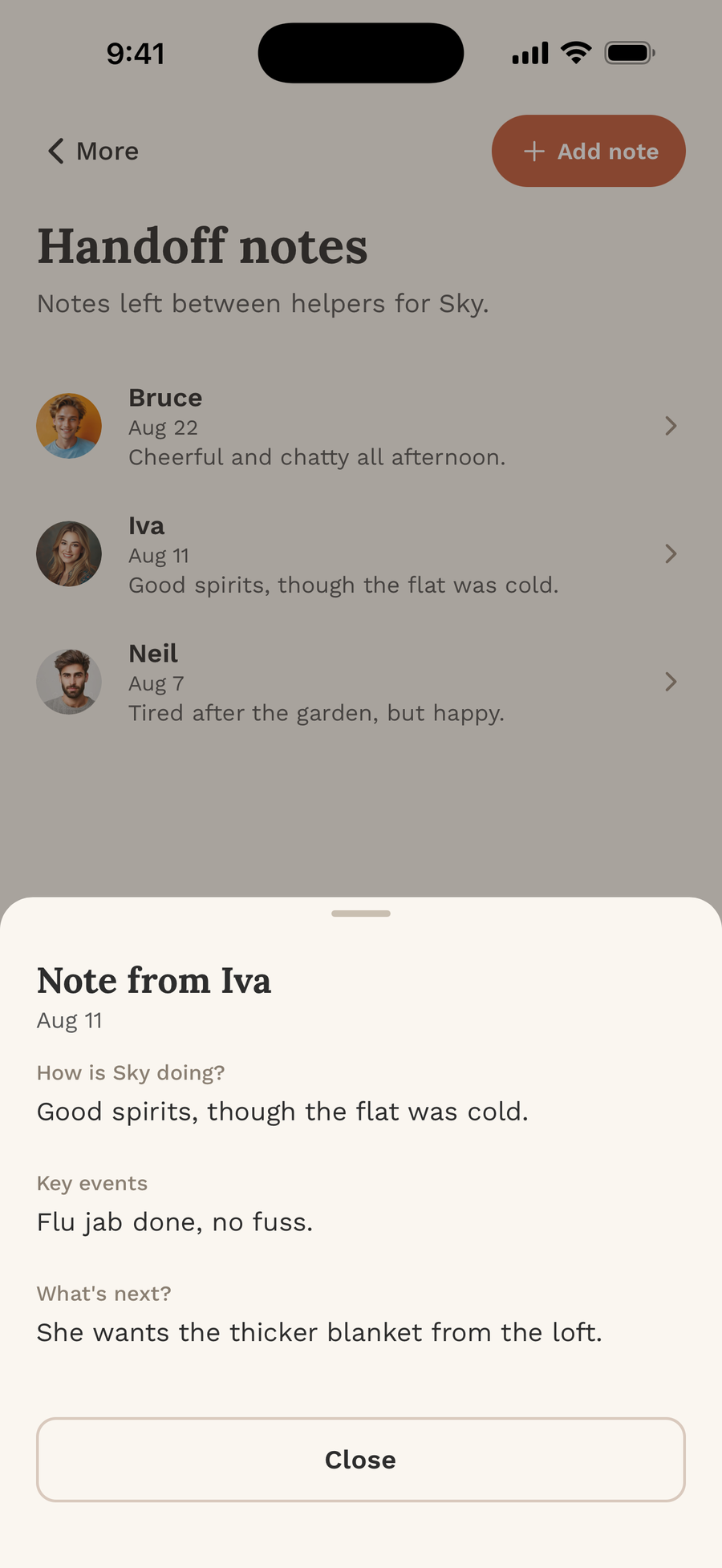
In FairNest, a family shares one Nest with med tracking alongside tasks, coverage, handoff notes, updates, and cost splitting. A dose can be marked Given or Skipped as it happens, so your sister doesn't have to call to ask, and you don't have to rely on remembering a Tuesday morning three days later. Your parent can be in the Nest too, and see what's going on. You can learn more at getfairnest.com.
Bottom line
Bottom line: organizing a parent's medications doesn't need a medical degree — it needs one list that's current, one daily routine that's the same for everyone, one rule for recording changes, and one shared record of what's actually been given. Start with the list, and the frightening phone call — "I think he might have had that pill twice" — gets a lot less likely.
The warm close
You don't need a medical degree to organize this well. You need one list that's current, one daily routine that's the same for everyone, one rule for recording changes, and one shared record of what's actually been given.
Start with the list. Sit down this week, line up the bottles, and write it all in one place your family can share. It's an hour that quietly prevents the most frightening phone call in caregiving: "I think he might have had that pill twice."
FairNest is the family caregiving app I built for exactly this — one shared place for medications, tasks, coverage, and updates, so helping never depends on guessing. Download FairNest on the App Store or on Google Play, and follow along on our Instagram.