
The short answer: you don't have to do everything at once — but in the first 30 days, start the paperwork while your parent can still decide clearly, build one shared medical picture the whole family can see, set a weekly communication rhythm, fix the top three home safety issues, and line up your own support before the adrenaline wears off.
Nobody remembers the drive to the appointment. Everybody remembers the drive home.
The doctor said the word — Alzheimer's, vascular dementia, mixed dementia, Lewy body — and suddenly the two of you are sitting in a parking lot, or on a quiet street outside their house, not starting the car. Your parent might be staring out the window. You might be. The word is sitting in the back seat like a third passenger, and nobody's sure who's supposed to talk first.
I hear this scene from families over and over. And the question that follows is always the same — what to do after a parent's dementia diagnosis: What do we do now?
Here's the honest answer: you don't have to do everything now. But a handful of things matter a lot in the first 30 days — not because dementia moves that fast (it usually doesn't), but because clarity now buys you calm later.
1. Get the paperwork conversation started — this week
This is the least comfortable item and the most time-sensitive one. While your parent still has the capacity to make decisions clearly, talk about the legal documents: a durable power of attorney, a healthcare proxy or advance directive, and HIPAA releases so doctors can talk to you. You don't need to finish everything this week, but you do need to start — capacity is the one thing that quietly erodes, and once it's gone, your options shrink and a courtroom enters the picture.
This isn't legal advice — an elder-law attorney in your state can tell you exactly what's needed. Many offer a one-hour consult that's worth every penny.
2. How do you build one shared medical picture after a dementia diagnosis?
Right now, the diagnosis lives in your head, a folder of pamphlets lives on the kitchen counter, and the rest of the family is texting you "wait, what did the doctor say exactly?" This is where caregiving starts to fragment: one person holds all the information, everyone else guesses.
Put it in one place, together, in plain language: the specific diagnosis and stage, the doctor's name and next appointment, the full medication list, allergies, pharmacies, insurance cards. Then share that one picture with everyone who needs it — siblings, the hired caregiver, the neighbor who checks in. When everyone reads from the same page, the "did anyone tell Mom's cardiologist?" problems shrink fast.
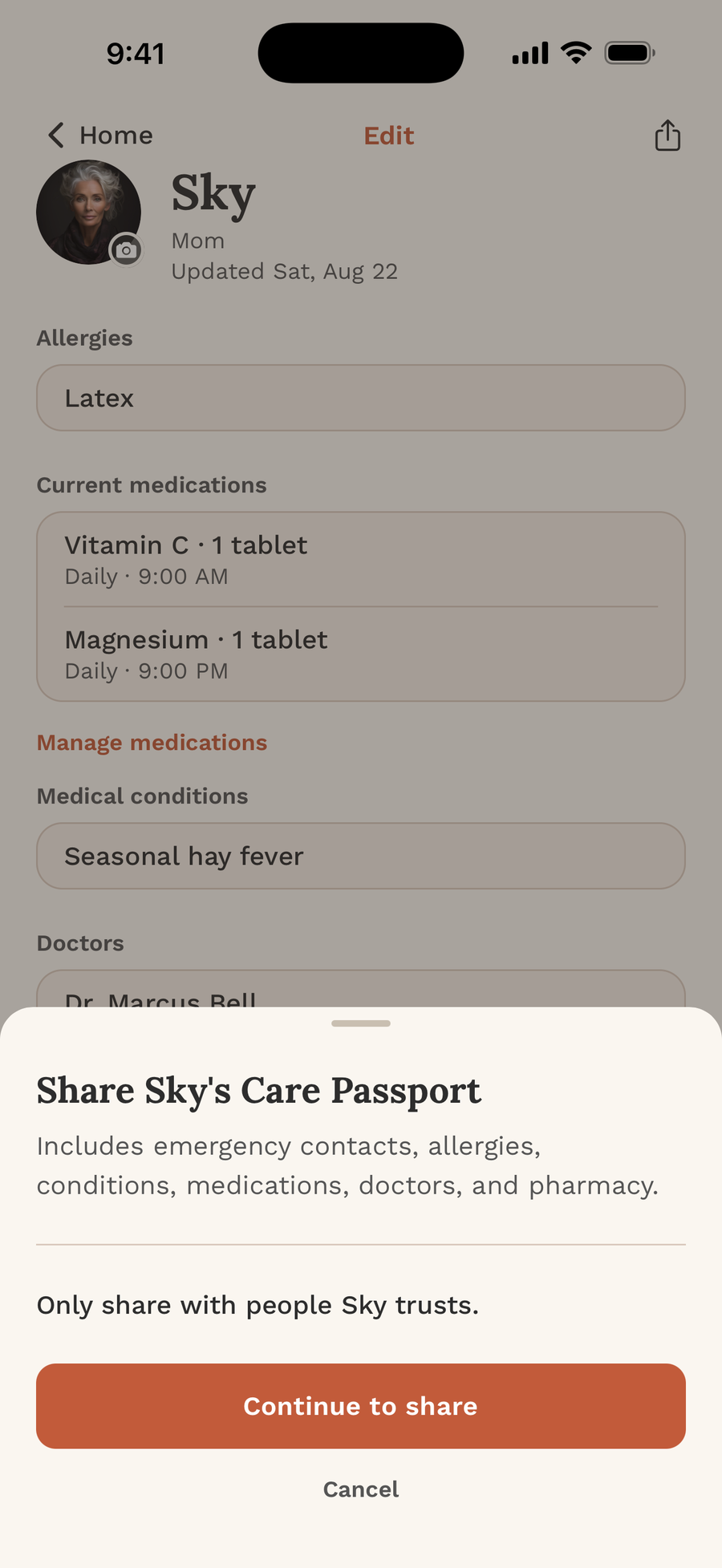
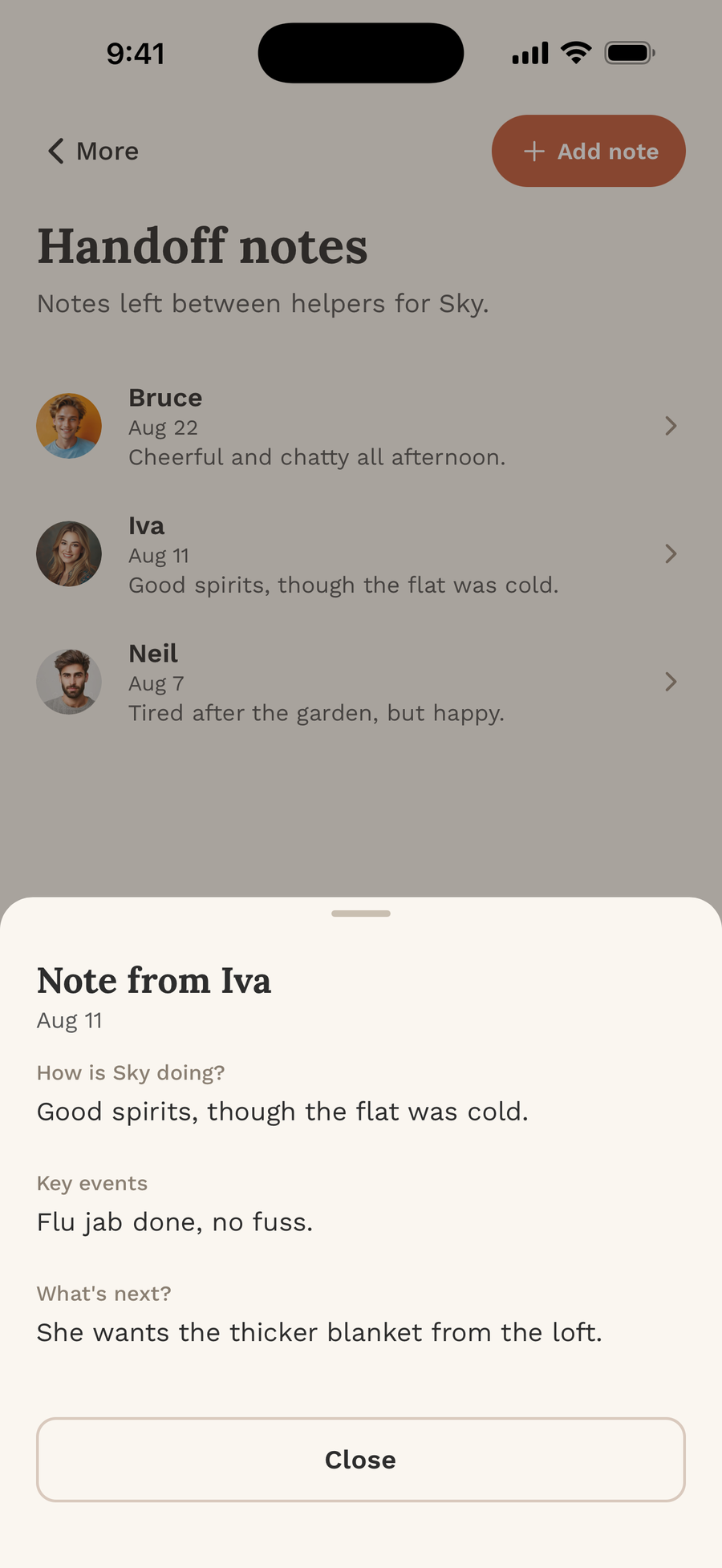
I built FairNest — my own app — partly for this exact moment. Our family kept passing a medical summary around like a baton nobody wanted to drop, and every time someone new joined the picture, we started over. The shared Nest keeps your parent's care picture — the diagnosis, meds, coverage, handoff notes — in one place the whole family can see, so the information doesn't live in one overwhelmed person's head.
3. How should a family communicate after a dementia diagnosis?
The group chat will try to be your care plan. Don't let it. Diagnosis news spawns a flurry of texts — fear, opinions, old grievances wearing new clothes — and the loudest sibling sets the tone. What you need instead is a rhythm: one short, regular update (weekly works for most families) that says what changed, what's next, and what help is needed. Facts first, decisions later, feelings by phone.
Write down who does what, even loosely: who's the medical contact, who handles bills, who covers weekends. It will feel formal. Do it anyway. Ambiguity is where sibling friction breeds.
4. Safety-proof the home and the routine — days 7–21
You don't have to remodel the house this month. Walk through it once with fresh eyes and fix the top three things: a stove timer or shut-off, meds in a weekly organizer (or a tracked list the whole family can see — FairNest has med tracking built in), and a driving conversation that involves the doctor, not just you. Doctors can order evaluations that take the whole family out of the bad-guy role.
Also: register with the local Alzheimer's Association chapter and consider a medical ID bracelet. Small things, big relief on the 2 a.m. worry circuit.
5. Name the grief — the whole month, and beyond
Nobody tells you this in the appointment: you'll grieve someone who's still alive. The trips you won't take, the conversations that will get shorter. That grief is real, and it doesn't wait for the later stages to introduce itself.
And watch the other grief — the caregiver one. In the first month, adrenaline carries you. Month three is when the exhaustion lands. Line up your own support now: a friend who'll let you vent, a caregiver support group, respite care booked before you're desperate. Taking care of yourself isn't separate from taking care of them. It's the same job.
The 30-day checklist, all in one place
- Paperwork started: POA, healthcare proxy, HIPAA releases, elder-law consult booked
- One shared medical picture: diagnosis, meds, doctors, insurance — everyone who helps can see it
- Communication rhythm set: weekly update, named roles, group chat demoted from care plan
- Home safety walkthrough: top three fixes done, driving conversation with the doctor
- Your own support lined up: a person, a group, and a respite plan — before you need them
Why I Built FairNest
I'm not writing this as a neutral observer. I built FairNest — my own app — because I watched families get a diagnosis and then lose the practical thread: the medical picture lived in one person's head, the updates scattered across texts, and every sibling asking the same questions. The shared Nest keeps the diagnosis, meds, coverage, and handoff notes in one place the whole family can see, so nobody has to carry the first 30 days alone. You can see how it works at getfairnest.com.
Bottom line
Bottom line: a dementia diagnosis doesn't demand everything at once — it demands the right few things, early. Paperwork started, one shared medical picture, a weekly rhythm, three safety fixes, and support lined up for you too: that's a first 30 days that buys calm instead of chaos.
Thirty days won't make the diagnosis feel okay. Nothing does that. But it can make the family feel okay — aligned, informed, and ready instead of reactive. That's the whole game: not controlling what's coming, but facing it together, with the practical stuff handled so you have room left for the human stuff.
If your family is in that parking-lot moment right now, FairNest was built for exactly this — a shared Nest for the tasks, coverage, updates, and handoff notes that multiply after a diagnosis, so nobody has to carry it all alone. You can find it on the App Store here: https://apple.co/4xRXJuq and on Google Play here: https://play.google.com/store/apps/details?id=com.bizvizorllc.fairnest
This is general information, not medical or legal advice — talk to your parent's doctor and a qualified attorney about what's right for your family.
I share more of these real-life caregiving guides over on Instagram at https://www.instagram.com/fairnestapp/ — come say hi.