
The short answer: build one complete medication list for your parent — every drug with brand and generic names, dose, time, prescriber, and purpose, plus over-the-counter drugs and supplements — give it one owner, keep it in exactly one shared place, reconcile it at every doctor visit, and log what actually happens between visits. At 2 a.m. in the ER, that list is the answer.
It's 2:14 in the morning. Your dad got dizzy getting up, fell in the hallway, and now you're both in the emergency department while a nurse with kind, tired eyes asks the question every caregiver dreads:
"Can you list all his medications? Including over-the-counter ones and any vitamins."
your mind goes blank. There's the pill organizer someone fills each week. You know there's something for blood pressure. Two somethings, maybe. The fridge list is three changes out of date, the discharge papers from March are in somebody's car, and the only person who knows the full picture is your dad — who's currently getting an EKG.
This scene plays out in emergency rooms every night, and it's almost never anyone's fault. It's what happens when a medication list lives in five places and no one's. The fix isn't complicated — it's knowing how to make a medication list for an elderly parent that actually survives the 2 a.m. ER visit. It's a system, and here's how to build one.
1. Who should own your parent's medication list — and where should it live?
Every failed medication list fails the same way: everyone thinks someone else is keeping it current. So make it explicit. One sibling (or one person) is the List Keeper. Their only job: the list gets updated within 24 hours of any change — new prescription, stopped pill, dose change, anything.
The list itself lives in exactly one place everyone can reach from a phone. A shared note, a shared document, a family app — the format matters less than the rule: there is one list, and it's current, or it isn't the list.
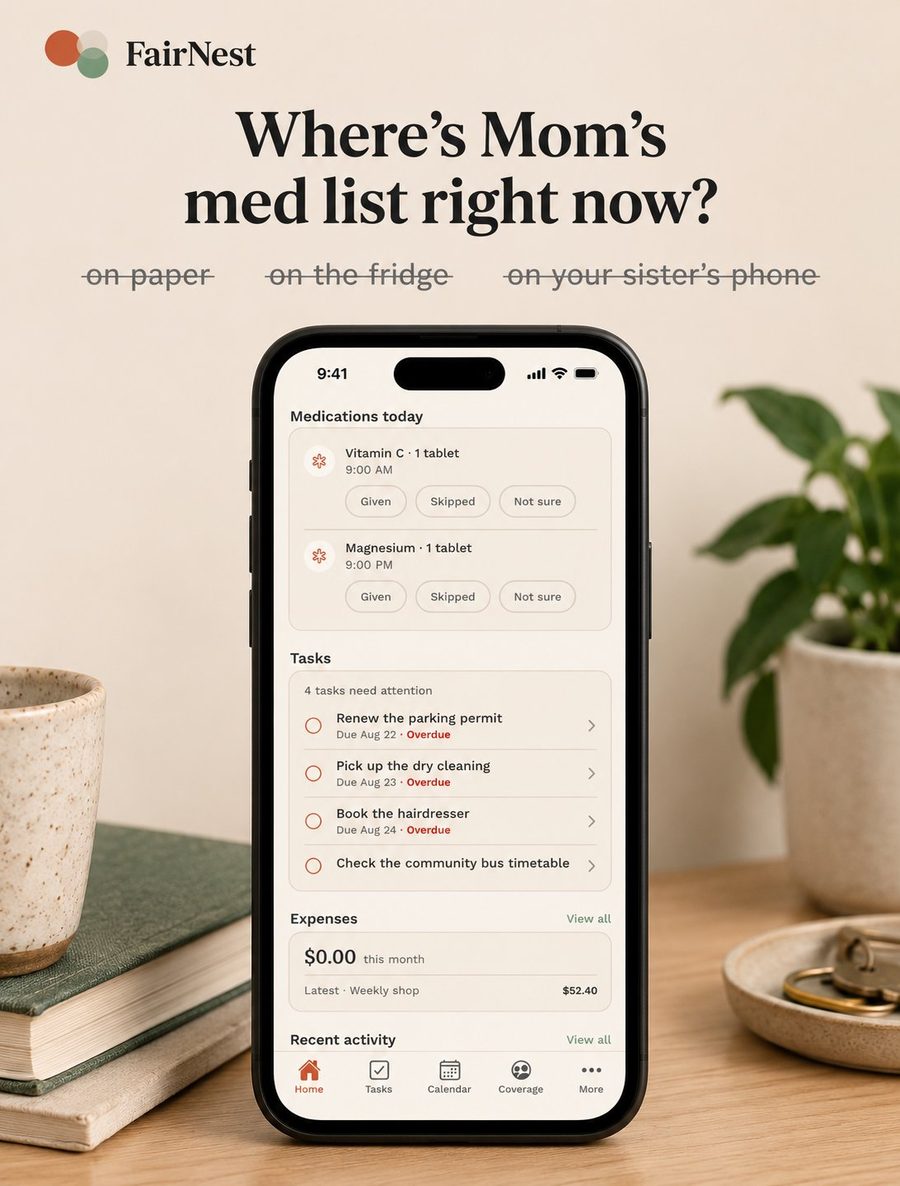
2. Include what ER staff actually need
Most home medication lists answer the wrong question — "what does Dad take?" What a doctor at 2 a.m. needs is "what could interact with what I'm about to give him?" Build the list to answer their questions:
- Every drug, with both names. Brand and generic (the heart pill and what's actually in it).
- Dose, time, and how it's taken. "10 mg, 8 a.m., with food" beats "one in the morning."
- Who prescribed it and why. "For blood pressure" tells the next doctor whether it's safe to adjust.
- The pharmacy it comes from. One pharmacy is ideal; if there are two, note which drugs come from which.
- Over-the-counter drugs, supplements, and vitamins. These cause more interactions than families expect. Include them all — no judgment, just completeness.
That's the whole list. It fits on one page, and it's worth more than every other piece of paper in the house combined.
3. How do you keep a medication list current at every doctor visit?
Here's the part families skip, and it's the most important one: doctor visits are when the list changes. Make a standing rule — whoever takes your parent to an appointment brings the current list, asks the doctor to review it, and updates the family's copy before dinner.
And ask the question most families never ask: "Can anything come off this list?" As parents age, medications accumulate — two drugs doing the same job, prescribed by two doctors who never compared notes. Doctors call a full review "medication reconciliation," and many will do one if you bring the list and ask. The person taking nine pills a day might need nine. But nobody should need nine just because nobody ever checked.
4. Make it reachable from anywhere, by anyone
The best medication list in the world is useless if it's in a kitchen drawer in another zip code at 2 a.m. Build redundancy:
- Everyone's phone has the current list (a photo of the printed list counts as a backup, not the system).
- The fridge has the printed version, updated when the master list updates.
- Your parent's wallet has a folded card with the short version: drugs, doses, allergies, emergency contact, and the List Keeper's phone number.
Print a fresh copy whenever the master changes — an old list in the wild is worse than no list, because it looks authoritative.
5. Track what actually happens between visits
A list tells you what's supposed to happen. Caregiving lives in what actually happens: the refill that ran out on a Friday, the new pill that causes nausea at night, the week your dad felt great and decided he didn't need the evening dose anymore. None of this is in the pill organizer. All of it matters at the next appointment.
Keep a simple running log — date, what happened, what you did. "9/28: refill ran late, missed one evening dose, called pharmacy." Thirty seconds, and it turns "he's been fine, I think" at the next visit into actual information a doctor can use.
Why I built FairNest around moments like this
I'm the founder of FairNest, and I'll tell you honestly why medication tracking is in my own app: I built it after watching a family try to reconstruct a medication list from memory in a hospital waiting room. The Nest — our shared family space — holds the medication list where every sibling can see it, tasks flag refills before they run out, and notes capture what happened between appointments, so nobody's reconstructing anything from memory at 2 a.m.
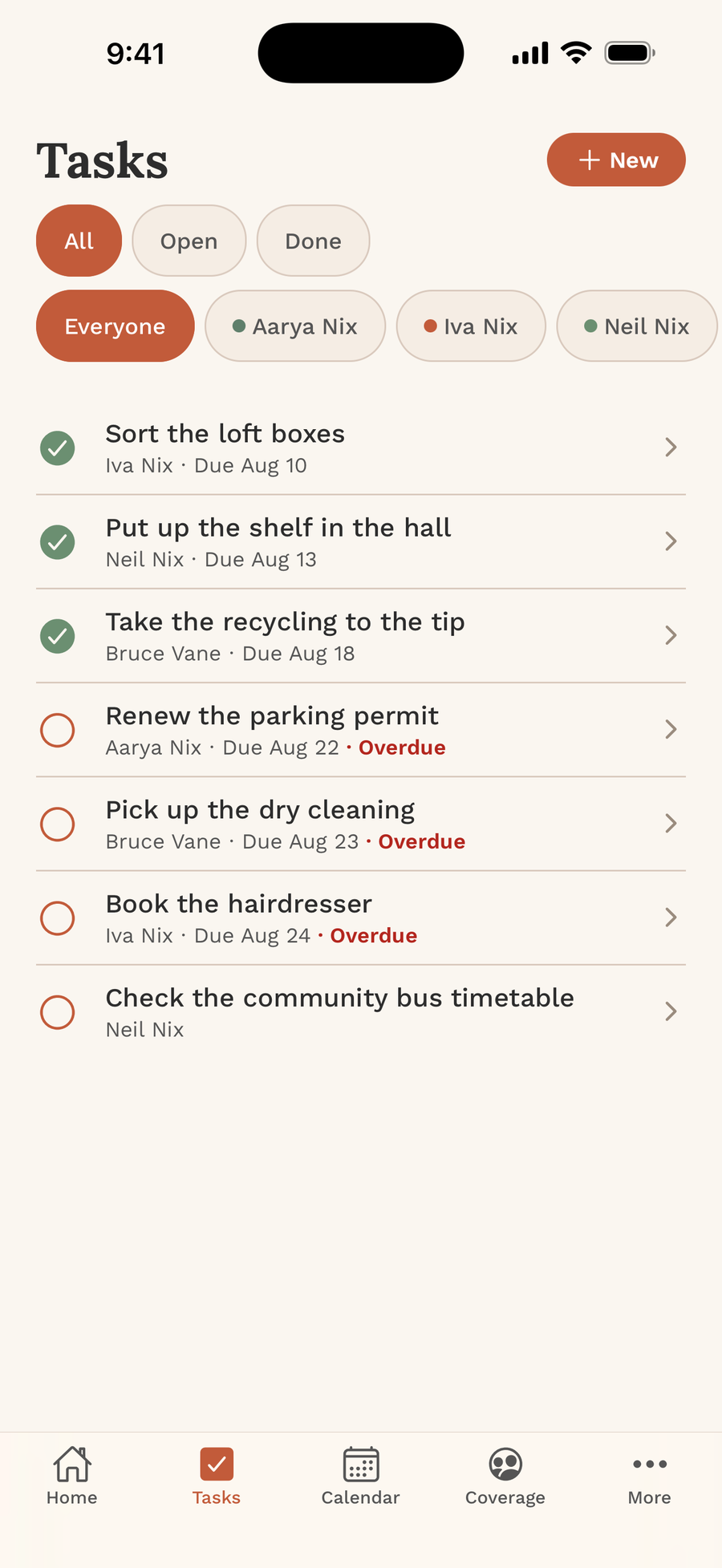
It's my own app, built for exactly this problem: the information one person holds in their head needs to live somewhere the whole family can reach. You can learn more at getfairnest.com, and grab the app on the App Store or on Google Play.
Bottom line
Bottom line: at 2 a.m. in the ER, nobody can reconstruct a medication list from memory — and nobody should have to. One list, one owner, one shared home, reconciled at every visit: build it tonight, and the next time the nurse asks, you'll have the real answer.
You don't need an app to start. Sit down with the pill bottles tonight, build the one-page list, pick a List Keeper, and text a photo to every sibling. It takes an hour. And the next time a kind, tired nurse asks you that question at 2 a.m., you'll have an answer — the real one, the current one, the one that keeps your parent safe.
This is general information, not medical advice — talk to your parent's doctor or pharmacist about what's right for them.
I share more of what I've learned building FairNest over on Instagram @fairnestapp — and getfairnest.com is where our little family app lives.