
The short answer: caregiver burnout doesn't come from a pampering deficit — it comes from being the family's single point of failure, holding the whole care plan in one head with no real handoff. Real rest isn't a spa day; it's knowing someone else has the ball, which means shared coverage, visible invisible work, and handoffs you can trust.
The worst advice I ever got as a caregiver — back when I was learning how to prevent caregiver burnout the hard way — came from someone who meant well. My mom was recovering from hip surgery, my phone was ringing with questions from my siblings, and I was eating dinner standing up at the kitchen counter. A friend said, "You need to take time for yourself. Book a spa day."
A spa day. I laughed — and then I cried a little, which tells you where I was that week.
Why doesn't bubble-bath self-care work for caregivers?
The self-care industry sells us a version of rest that's really just consumption: candles, bath bombs, a girls' weekend. But caregiver burnout isn't a pampering deficit. It comes from the mental load of being the family's single point of failure, the emotional weight of watching a parent decline, and the grinding sense that the responsibility never really hands off.
You can't bubble-bath your way out of being the only person who knows everything. And most "take time for yourself" advice quietly assumes the one thing caregivers don't have: someone covering for them while they're gone.
What actually helps prevent caregiver burnout?
1. Trade "time off" for "off duty."
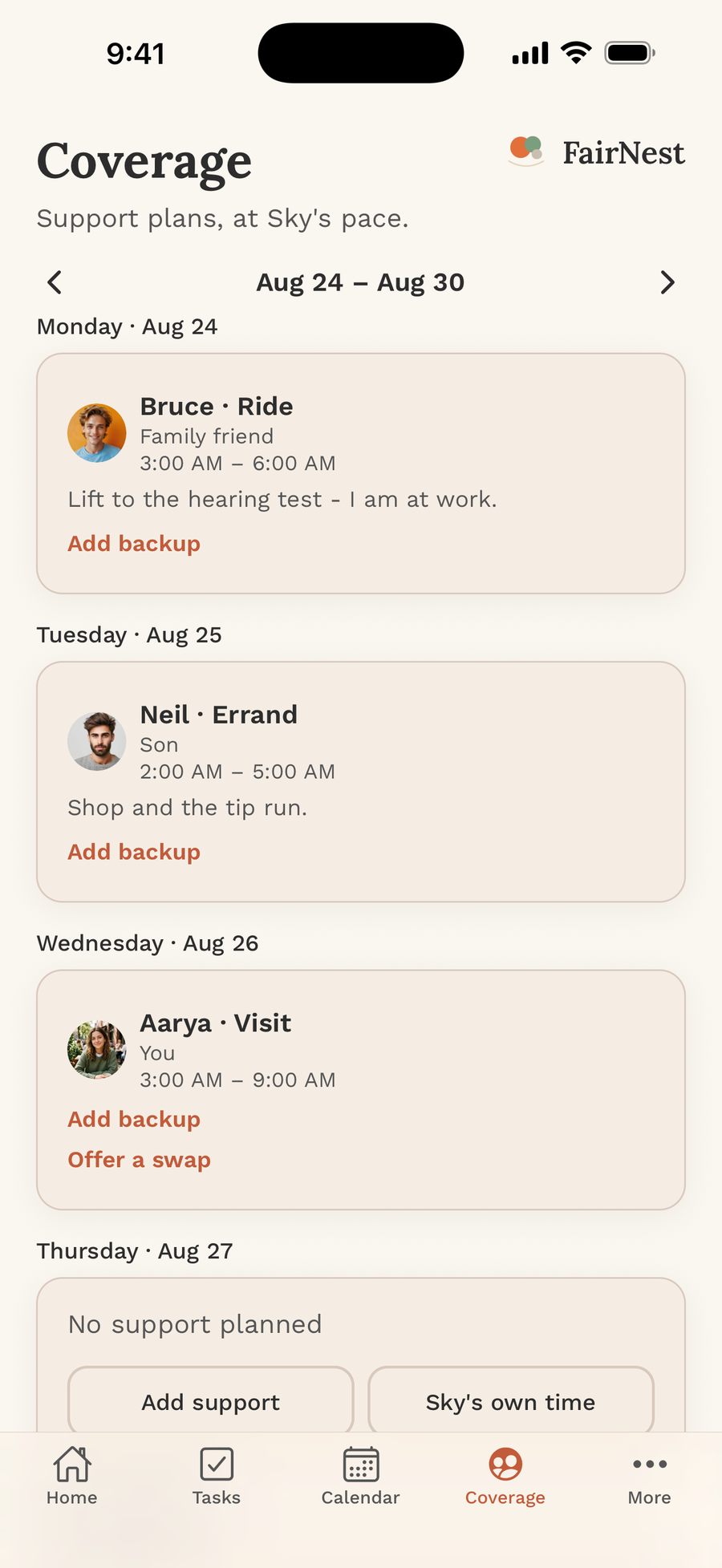
Real rest for a caregiver isn't leisure — it's the felt knowledge that someone else has the ball. Ten minutes of genuine off-duty time beats a two-hour spa appointment you spend checking your phone. The turning point in my family was when we stopped treating coverage as a favor and started treating it as infrastructure: a shared calendar where everyone could see who was on point this weekend, who's taking the Thursday appointment, who's got the night shift. When I knew my sister had Saturday, I could sleep without my phone on the pillow.
2. Split the invisible work, not just the visible work.
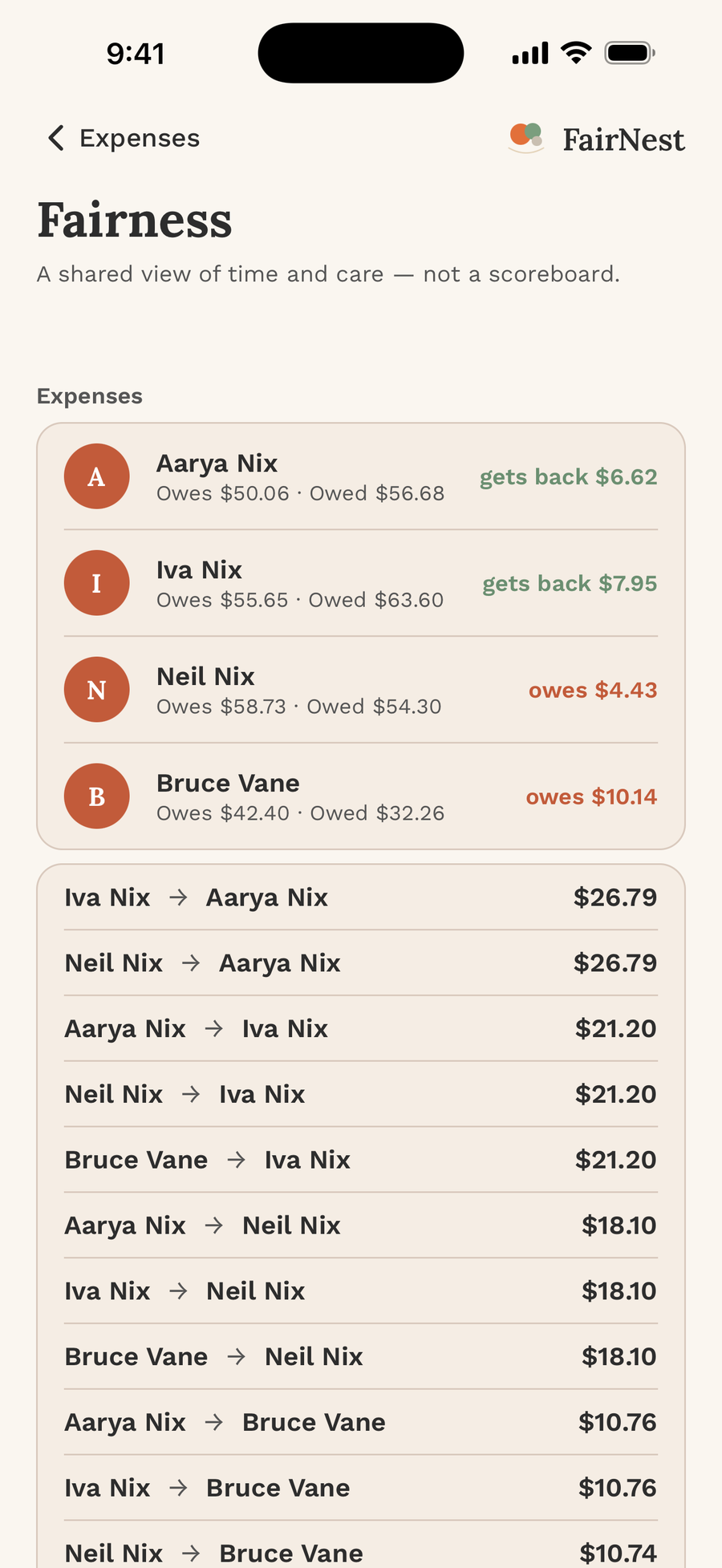
Everyone notices the big tasks: the hospital trips, the weekend visits. But burnout lives in the invisible labor — being the person who refills the prescriptions, calls the insurance company, notices Dad's been quieter this week, remembers that Mom's favorite aide is leaving and someone needs to find a replacement. In my family, one sibling did all of that while the others "helped out" on weekends. The unequal load bred resentment, which bred guilt, which bred more stress than any single task.
We fixed it the unglamorous way: we listed everything, including the stuff that had never been said out loud, and put it all in one shared place. Seeing "call insurance about claim #4821" next to "mow Mom's lawn" made the invisible work visible for the first time. Once everyone could see the full picture, splitting it fairly became a practical conversation instead of an emotional explosion.
3. Schedule the handoff, not just the tasks.
Most families plan care but never plan handoffs — so every shift change happens through a frantic text thread. "Did Mom eat? Did she take her pills? She seemed off today, watch her." My brother once drove to my mom's house for his weekend and found a post-it on the fridge that said "she didn't eat lunch, call me." That was the entire handoff.
We started doing handoff notes the way nurses do: what happened, what's pending, what to watch. Not essays — just a few lines, in the shared Nest where the whole family could see them. It cut the anxious 11 PM phone calls nearly to zero, and it cut something else too: the constant background worry that comes from never quite knowing where things stand. You can't relax on your off day if you're not sure your off day actually started. A real handoff is how you know.
4. Let rest be boring.
The caregivers I know who avoid burnout aren't doing anything aspirational. They're sitting on their own couch. They're taking a walk around their own block. They're watching bad television without one eye on a group chat. Boring rest is the kind that works, because it doesn't require logistics, money, or anyone's permission.
But boring rest only happens when you're genuinely off duty — which is why the first three steps come first. You can't take a guilt-free nap on your couch if you're the only one holding the whole care plan in your head. Build the coverage, split the invisible work, make the handoffs real — and then the ordinary stuff becomes possible again.
Why I built FairNest
I'm the founder of FairNest — my app — and I'll be honest about why it exists. I didn't build it because my family needed another task list. I built it because I was burning out, and when I looked hard at why, it wasn't the tasks that were killing me. It was being the only person who held the whole picture. The shared Nest — tasks, coverage, handoffs, the invisible stuff made visible — came directly out of that realization. An app can't fix grief or guilt or the 3 AM worry. But it can make sure no single person is the single point of failure, and in my experience, that changes everything.
This isn't medical advice — I'm not a doctor or a therapist, just a daughter who burned out and learned from it. If what you're feeling looks like depression or it's affecting your health, talk to your doctor. What I can share is the family side: the fix was never a spa day. It was making sure the load was shared and the handoffs were real.
You can read more about how we run our family's Nest at getfairnest.com — and if a shared care picture would help your family the way it helped mine, the app is here: https://apple.co/4xRXJuq on the App Store and https://play.google.com/store/apps/details?id=com.bizvizorllc.fairnest on Google Play. We talk about the unglamorous, real side of caregiving over at instagram.com/fairnestapp, too.
Bottom line
Bottom line: you can't bubble-bath your way out of caregiver burnout, because burnout is a load problem, not a leisure problem. Share the coverage, make the invisible work visible, and make handoffs real — then boring rest on your own couch finally becomes possible.
The spa day can wait. What you need first is to know someone else has the ball — so you can sit on your own couch, watch your bad television, and finally, actually rest.